
The Canadian Low-Emission Energy Registry
Once in operation, the Canadian Low-Emission Energy Registry will issue, track and retire Biomethane Guarantees of Origin (BioGOs).
One BioGO is issued to producers for every gigajoule of biomethane injected into a natural gas pipeline. BioGOs can then be transferred between a variety of counterparties before being retired and allocated to gas consumers. The CLEER ensures that only one BioGO is issued for each unit injected, that they are transferred securely, and only ever allocated to one consumer. By doing so we provide certainty that biomethane supplies are not double counted.
CLEER is being implemented by the Canadian Gas Association and is supported by our partners. The CLEER is expected to begin operations in December 2026.
Founding Partners






Implementation Partners

Acknowledgements
CGA gratefully acknowledges the financial support of Natural Resources Canada and the Province of British Columbia through the Ministry of Energy and Climate Solutions.


What is biomethane?
Biomethane (also known as renewable natural gas, or RNG), is made from renewable energy sources such as agricultural and food waste, and wastewater and landfill gas. Biomethane is chemically identical to natural gas and can therefore be delivered by natural gas utilities through the same pipeline system, and burned in the same appliances without any impact to performance.
Why is biomethane low-emission energy?
Biomethane is a type of low-emission energy that can have significantly lower greenhouse gas emissions compared to natural gas.
Both natural gas and biomethane release carbon dioxide when burned in furnaces or other heating appliances. However, biomethane is produced from plant-based matter that absorbs carbon dioxide from the atmosphere to grow. If left to decompose on its own, this matter would return its carbon dioxide back to the atmosphere.
The production and combustion of biomethane is part of this short-term carbon cycle. Therefore, while burning natural gas releases carbon dioxide that has been trapped in the earth for eons and increases the total amount of greenhouse gases in the atmosphere, burning biomethane returns to the atmosphere the carbon dioxide that was absorbed from the atmosphere by the same plants as they grew.
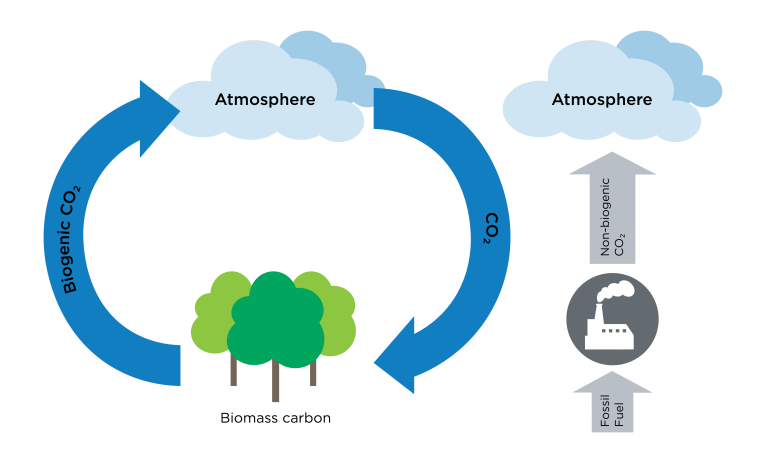
Courtesy of the International Energy Agency
Biomethane Guarantees of Origin
Biomethane is injected into the natural gas system where it mixes with fossil natural gas and it is not possible to track the actual biomethane molecules.
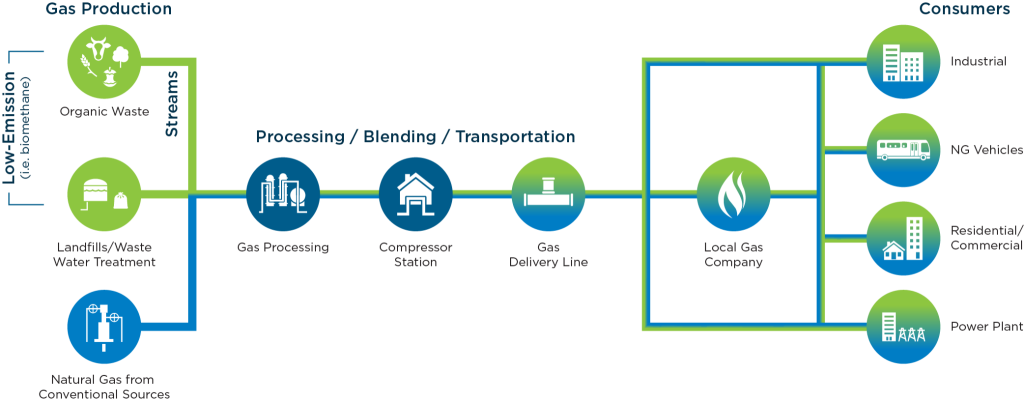
The Canadian Low-Emission Energy Registry is founded on the principle that low-emission energy is comprised of two products: (i) the physical molecules and the energy it provides, and (ii) the environmental benefits that are quantified and captured in an environmental attribute certificate. Each product is tracked and traded separately.
The CLEER issues Biomethane Guarantees of Origin (BioGOs – the name given to the environmental attribute certificate issued by the CLEER) for each gigajoule of biomethane produced to document and track the environmental benefits of biomethane in a central registry. While biomethane flows through Canada’s natural gas system freely in response to supply and demand in different parts of the system, BioGO transactions are managed on CLEER. This enables broader adoption of biomethane when physical transport isn’t always feasible.
When a natural gas consumer buys a BioGO they are matching the gas that they have withdrawn from their natural gas utility to the unit of biomethane that was produced and injected into the Canadian natural gas network. The BioGO will be cancelled and will not be available to any other gas consumer, thereby assuring that each molecule of biomethane, and its impact on reducing GHG emissions from fossil natural gas consumption, is counted only once.
Consumer Claims
BioGOs do not track actual molecules of biomethane, and consumers who normally take gas from their natural gas utility should not claim to have physically consumed biomethane. However, BioGOs do allow consumers to match their consumption to biomethane produced, and to allow them to claim to have bought that biomethane and to own the associated environmental benefits.
Recognition of the consumption of biomethane via the use of BioGOs varies depending on different regulations and GHG reporting guidelines.